Is Strength Training Safe for Young Athletes? A Parent’s Guide
Oct 15, 2026
by Jeff Greer
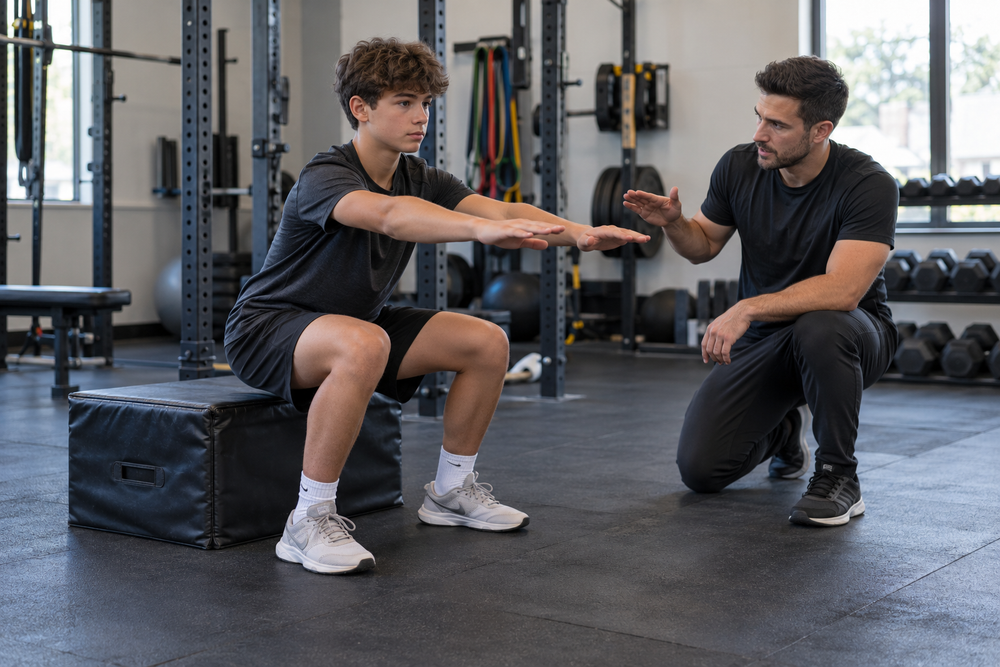
If your child plays soccer, football, basketball, baseball, softball, swims, runs track, or participates in another sport, you may have wondered whether strength training belongs in their development.
For healthy young athletes, appropriately designed and supervised resistance training can be part of a safe, well-rounded approach to physical development.
The important words are appropriately designed and supervised.
Youth training should not simply copy an adult lifting program with lighter weights. A good program considers age, experience, movement ability, physical development, sport demands, and the individual athlete.
At Pinnacle Fitness in Fairfield, Youth and Team Strength and Conditioning is offered for athletes ages 10 through 18, with programming adapted to age, sport, and experience.
Here is what parents should understand before choosing a program.
Strength Training Is More Than Lifting Heavy Weights
When parents hear “strength training,” it is easy to picture heavy barbells and maximum effort lifting.
Youth strength and conditioning can look very different.
Resistance may come from body weight, resistance bands, medicine balls, free weights, or other appropriate equipment. Training can also incorporate movement skills, coordination, speed, agility, mobility, and conditioning.
The National Strength and Conditioning Association emphasizes long-term athletic development built around physical literacy, motor skills, foundational strength, and appropriate progression as young people grow.
The objective is not simply to see how much weight an athlete can lift.
It is to develop a better foundation for movement and athletic participation. 💪
What Should Young Athletes Be Developing?
A well-designed youth program can address several physical qualities.
Movement Quality
Before worrying about heavy resistance, young athletes should learn how to control fundamental movements.
That can include squatting, hinging, pushing, pulling, landing, jumping, accelerating, decelerating, and changing direction.
The exercises chosen should match the athlete's developmental level and current ability.
Strength
Strength gives athletes another physical capacity they can develop gradually.
Resistance should be appropriate for the athlete, and progression should be earned through consistent technique and control rather than rushed.
Speed and Coordination
Athletic performance requires more than strength.
Young athletes also benefit from opportunities to practice coordination, acceleration, agility, and body control in ways that complement their sport.
Confidence
Learning new skills and seeing gradual improvement can help young athletes become more comfortable with physical training.
The goal should be to create a positive relationship with movement, not make training feel like punishment for poor performance.
What Does Current Guidance Say About Youth Activity? 🏃
Children and adolescents should not be treated as smaller adults when discussing exercise recommendations.
The Centers for Disease Control and Prevention states that children and adolescents ages 6 through 17 should accumulate at least 60 minutes of moderate to vigorous physical activity each day.
Most of that activity should be aerobic. Muscle strengthening and bone strengthening activities should be included on at least three days each week.
Importantly, that does not mean every child needs three formal weight training sessions.
Muscle strengthening for youth can include activities such as climbing, push-ups, gymnastics, and appropriately structured resistance exercise.
The CDC also emphasizes that youth activities should be varied, age-appropriate, and enjoyable.
Does Strength Training Stunt Growth?
This is one of the most persistent concerns parents have about youth resistance training.
Current professional guidance does not support treating properly designed youth resistance training as inherently harmful to growth.
The NSCA position statement concludes that appropriately prescribed and supervised resistance training can offer benefits to children and adolescents.
The important distinction is between structured training and inappropriate training.
Poor technique, unsuitable loads, inadequate supervision, or a program that ignores an athlete's developmental level are not the same thing as a properly coached youth strength program.
Parents should therefore focus less on whether resistance exists in the program and more on how that resistance is selected, taught, supervised, and progressed.
What Youth Training Looks Like at Pinnacle Fitness
Pinnacle's Youth and Team Strength and Conditioning program is designed for middle school, high school, and club sport athletes.
The current program emphasizes:
• Proper movement patterns
• Gradual strength development
• Speed and agility
• Mobility
• Endurance
• Coordination
• Athletic confidence
Pinnacle states that athletes can participate individually or through team-based programs, with programming adapted to their age, sport, and experience.
The program currently serves athletes ages 10 through 18.
That age range is important because a 10-year-old beginner and a 17-year-old experienced athlete should not automatically receive the same training prescription.
A Parent Checklist for Evaluating a Youth Strength Program 📋
Before enrolling your child in any strength and conditioning program, ask these questions.
Is the Program Appropriate for Their Age?
Training should reflect the athlete's developmental level rather than simply grouping everyone together because they play the same sport.
Does the Coach Teach Technique Before Increasing Resistance?
Good movement should come before chasing heavier weights.
Progress should reflect competence and readiness.
Can Exercises Be Modified?
Athletes develop at different rates.
A good coach should be able to adjust exercises, resistance, complexity, and training volume according to the athlete.
Does the Program Develop More Than Strength?
Youth athletic development can include strength, speed, coordination, mobility, conditioning, and movement skills rather than focusing exclusively on lifting.
Is the Environment Positive?
Young athletes should be challenged without being embarrassed or compared unfairly with more physically mature athletes.
Does the Coach Consider the Athlete's Other Training?
School sports, club practices, competitions, physical education, and recreational activities all contribute to an athlete's overall workload.
More training is not automatically better.
Is There Qualified Supervision?
Youth resistance training should involve appropriate instruction and supervision.
If you cannot get clear answers about how technique, progression, and safety are handled, keep asking questions.
More Is Not Always Better
Youth sports can already involve demanding schedules.
Adding strength and conditioning should have a purpose.
An athlete who practices several days per week, competes on weekends, and participates in additional sport activities has a different training picture from an athlete who is currently in an off-season.
That is why long-term athletic development matters.
The NSCA describes this approach as a progression of physical literacy, motor skills, strength, and other athletic qualities as a child grows and matures.
A well-designed program should complement the athlete's development rather than simply filling every available day with another workout.
Rest, sleep, nutrition, school, and time away from organized training remain part of the bigger picture.
Should Youth Athletes Specialize Their Training?
Young athletes certainly need skills specific to their sports, but their physical development should not become unnecessarily narrow.
A soccer player needs soccer practice.
A swimmer needs time in the pool.
A baseball player needs sport-specific technical development.
Strength and conditioning can provide a broader physical foundation by developing qualities that support movement across different activities.
This is one reason Pinnacle describes its youth program around strength, agility, mobility, speed, endurance, and athletic fundamentals rather than only one sport-specific exercise.
What About Injury Prevention?
Be careful with absolute claims here.
No strength program can guarantee that a young athlete will avoid injury.
Sports involve unpredictable situations, contact, fatigue, competition, and other factors that cannot be completely controlled.
Appropriate strength and conditioning can be part of preparing an athlete for physical demands, but parents should be cautious of anyone promising an injury-proof athlete.
If your child already has pain, an unresolved injury, or a medical condition affecting exercise, seek guidance from an appropriate health care professional before relying on general fitness advice.
A strength coach and health care professional have different roles.
Questions to Ask Your Child Too
Parents should not be the only people evaluating the program.
Ask your athlete:
Do you understand why you are doing the exercises?
Do you feel comfortable asking the coach questions?
Do you feel challenged without feeling constantly overwhelmed?
Are you enjoying at least some part of the training process?
Do you feel that you are learning?
Young athletes need structure, but their experience matters too.
Training should help them develop a healthier and more capable relationship with physical activity rather than making exercise something they dread.
Frequently Asked Questions
What age can athletes start strength training?
There is no single age that automatically determines readiness for every child. Readiness depends on the athlete's ability to follow instructions, perform appropriate movements, and participate in a supervised program designed for their developmental level. Pinnacle's current youth program serves athletes ages 10 through 18.
Does my child need to play a sport to benefit from strength training?
Not necessarily. Physical activity and age-appropriate muscle strengthening can benefit youth beyond organized sport. Pinnacle's specific program, however, is positioned as Youth and Team Strength and Conditioning for young athletes.
Should young athletes lift as much weight as possible?
No. Youth training should prioritize appropriate technique, supervision, and progression. Maximum load should not be the defining goal of a developmental program.
Can strength training replace sports practice?
No. Strength and conditioning develops physical qualities, while sport practice develops the technical and tactical skills specific to the activity. The two can complement each other.
Build the Athlete Before Chasing Bigger Numbers
The best youth strength program is not necessarily the one with the heaviest weights or hardest workouts.
It is the one that respects the athlete's current stage of development while helping them progressively improve movement, strength, coordination, speed, confidence, and other relevant qualities.
For parents in Fairfield and the surrounding 707 area, Pinnacle Fitness offers Youth and Team Strength and Conditioning for athletes ages 10 through 18, with individual and team-based training options.
If you are considering structured training for your young athlete, start by discussing their age, sport, experience, current schedule, and goals with the Pinnacle coaching team so you can determine whether the program is an appropriate fit.
